The Design of Space Systems
One semester from a concept to a tested prototype.
Brown University School of Engineering
The people- Me, visiting researcher
- Professor Rick Fleeter, delivers the foundational aerospace engineering courses, with my help
- 3 to 7 students, in each team
The brief
I assist in delivering the foundational aerospace engineering courses in Brown University’s School of Engineering. My primary focus is ENGN1760, The Design of Space Systems.
The course compresses the early life of a space program into one semester. Teams form around a prototypable concept of space engineering, then spend the rest of the semester designing, building and testing a prototype of it.
Every semester is different. Each team chooses its own concept, so the engineering problems change with each class, and no semester can run on a fixed set of answers.
How it unfolded
- Week 1Students formed teams and developed rough mission concepts at technology readiness level (TRL) 1 on the NASA scale.
- Week 2Teams presented their rough concepts, and each team downselected to one.
- Weeks 3 to 16Teams developed the selected concept iteratively. Formal design reviews were deliverables throughout, in standard U.S. government review terminology, from the preliminary design review (PDR) through to the critical design review (CDR).
- Mission and requirementsEach team turned a loosely stated end-user need, such as the reduction of space debris, into a valid mission statement and top-level requirements.
- ArchitectureTeams compared architecture alternatives, defended a selection, and estimated the scale of each subsystem, for example through link margin calculations, within budgets for mass, dimension, power, performance, cost, schedule and risk.
- Program planTeams wrote a management plan with a Statement of Work, a calendar and a Basis of Estimate for program cost, justified the return on investment, and assessed legal, policy and environmental feasibility.
- End of semesterEach team delivered a full engineering workup and a functional prototype that de-risked a critical subsystem, taking the concept to TRL 3. The final is a demonstration of the prototype and a presentation of the engineering analysis from the whole semester. A team without a working prototype fails the course.
What I did
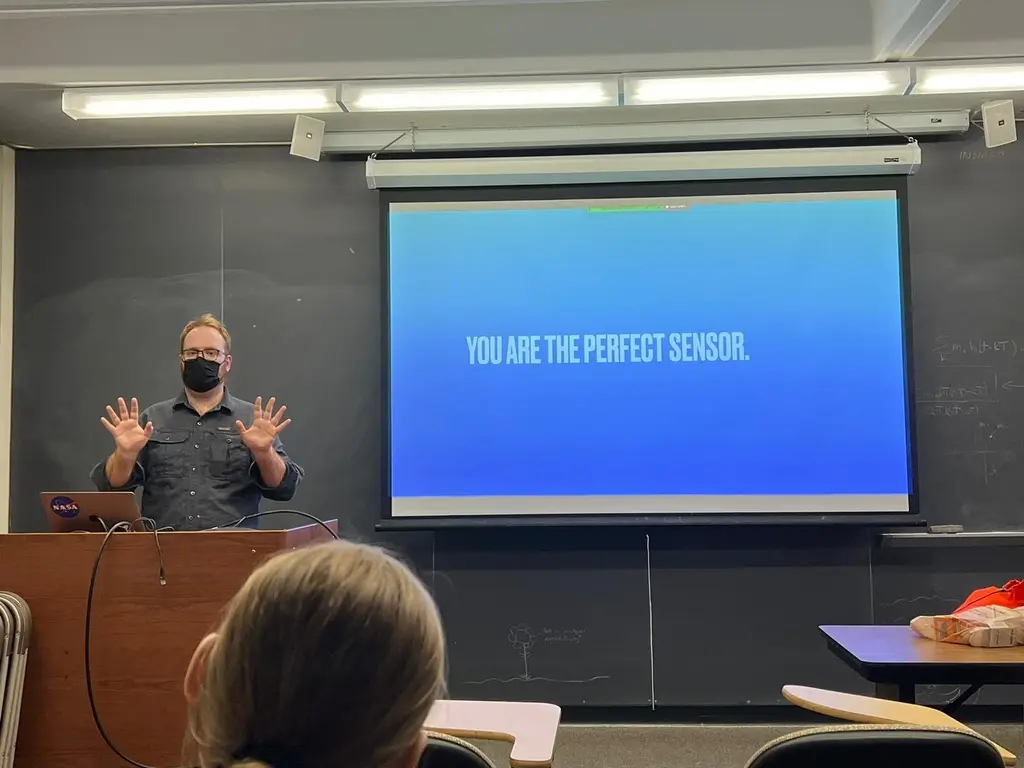
- Theory to practiceI add the most value by bridging the divide between theory and practice. Students arrive with the foundational theory of aerospace engineering, and I show them how it applies to a real design, a real budget and a real prototype. I also deliver two or three lectures each semester.
- Hard questions, earlyI push teams to the hard questions early: how does it work, how will it be prototyped, what is the prototype meant to show, and which risks does it retire. A concept that fails on physics, cost or feasibility costs a team the least at TRL 1, before the design reviews commit it to a direction.
- On trackI keep teams on track. Each design review is a checkpoint against the team's schedule and budgets, and I hold teams to them from the first concept through to the CDR. Teams most often drift through side quests: a discovery made while building draws weeks of effort that has little bearing on the end project. Such paths are worth exploring, but they cost schedule.
- Weekly rhythmI meet each team every week for one to one and a half hours. The time goes to the team’s questions and often to building together in the school’s communal workshop. I also meet students outside that schedule on request.
- Tools and processesI teach students to use engineering tools and processes as working engineers use them. The requirements, trade studies, budgets and reviews of the course are the same instruments a funded program runs on.
- System architectureI help each team develop its system architecture. I review the alternatives a team compares, test the case for its selection, and check that its subsystem estimates close within its budgets.
- Program adviceI advise each team on its program: the scope of its Statement of Work, the realism of its calendar and cost estimate, and the case for its return on investment.
- Engineering guidanceI am the practicing engineer on the course. I give specific engineering guidance on each team's aerospace concept, and students bring their hands-on engineering questions to me. The concepts range from laser-propelled probes to Martian regolith construction, so the guidance spans propulsion, materials, structures and test.
Brown has no aerospace engineering concentration or major, and ENGN1760 is one of perhaps two or three aerospace engineering courses on campus. About a third of the students who take it go on to work at companies such as SpaceX and Blue Origin.
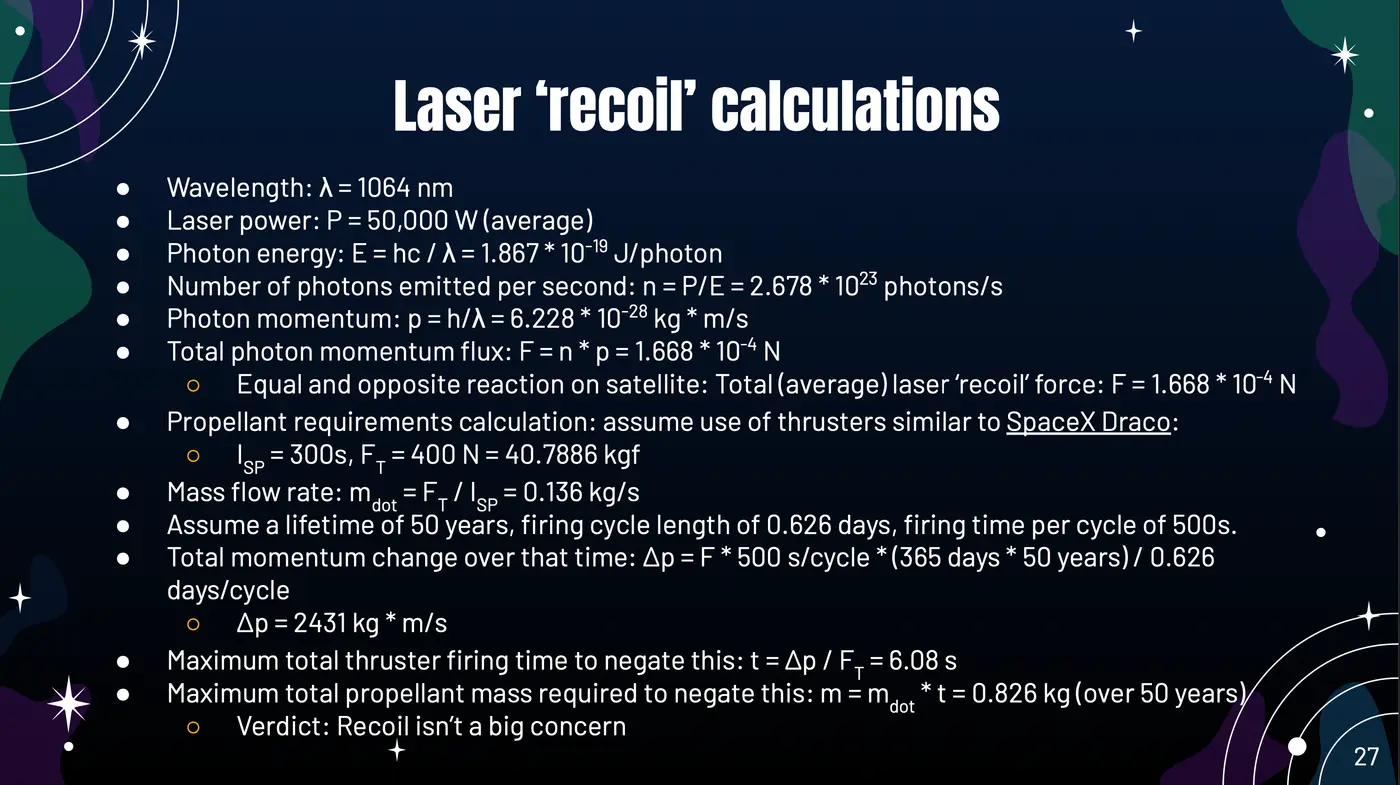
- Slow motion video of a pulsed laser ablation test on a ceramic coupon at 75,000 frames per second and laser recoil calculations. Courtesy of Team Space Junk Destroyer, Spring 2024
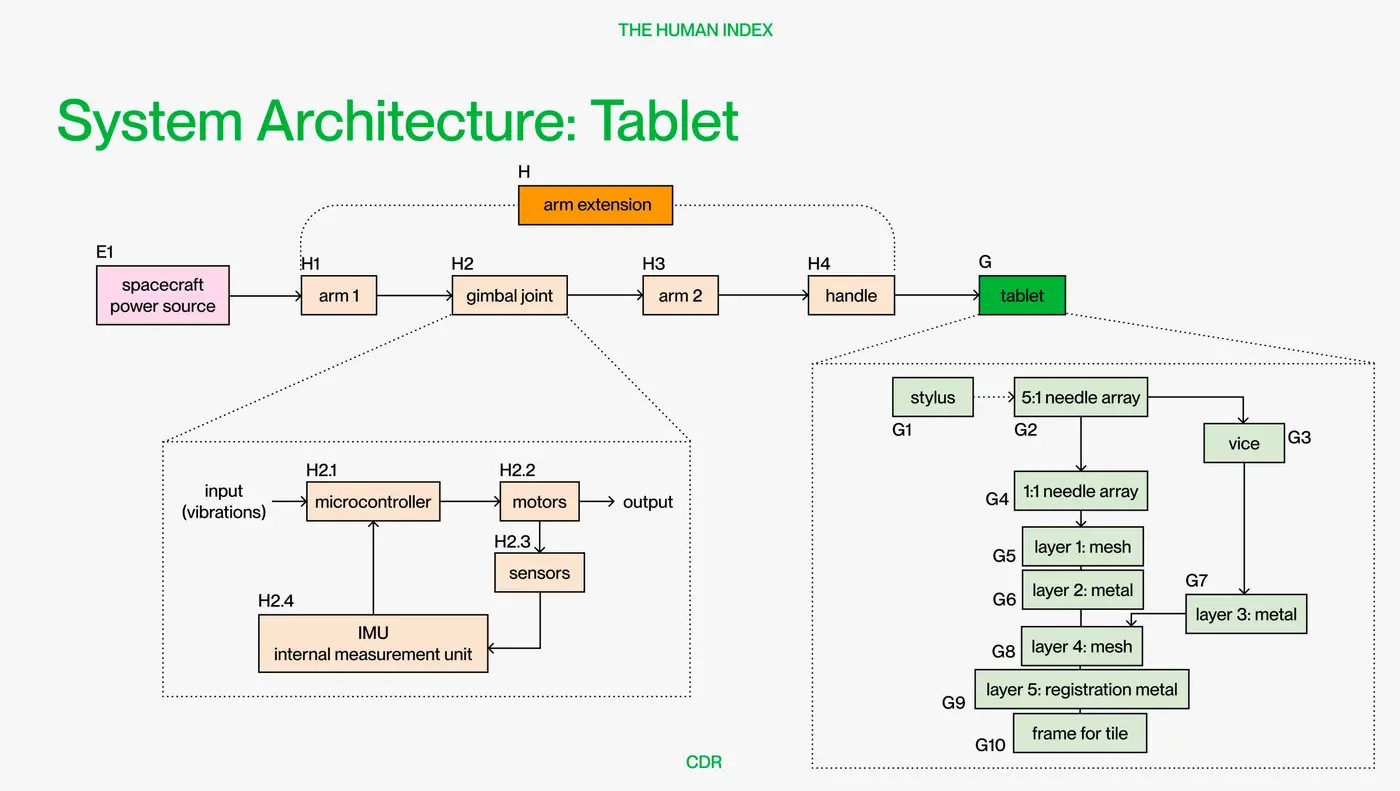
- System architecture diagram for a 10,000-year data preservation device. Courtesy of Team Human Index, Spring 2024
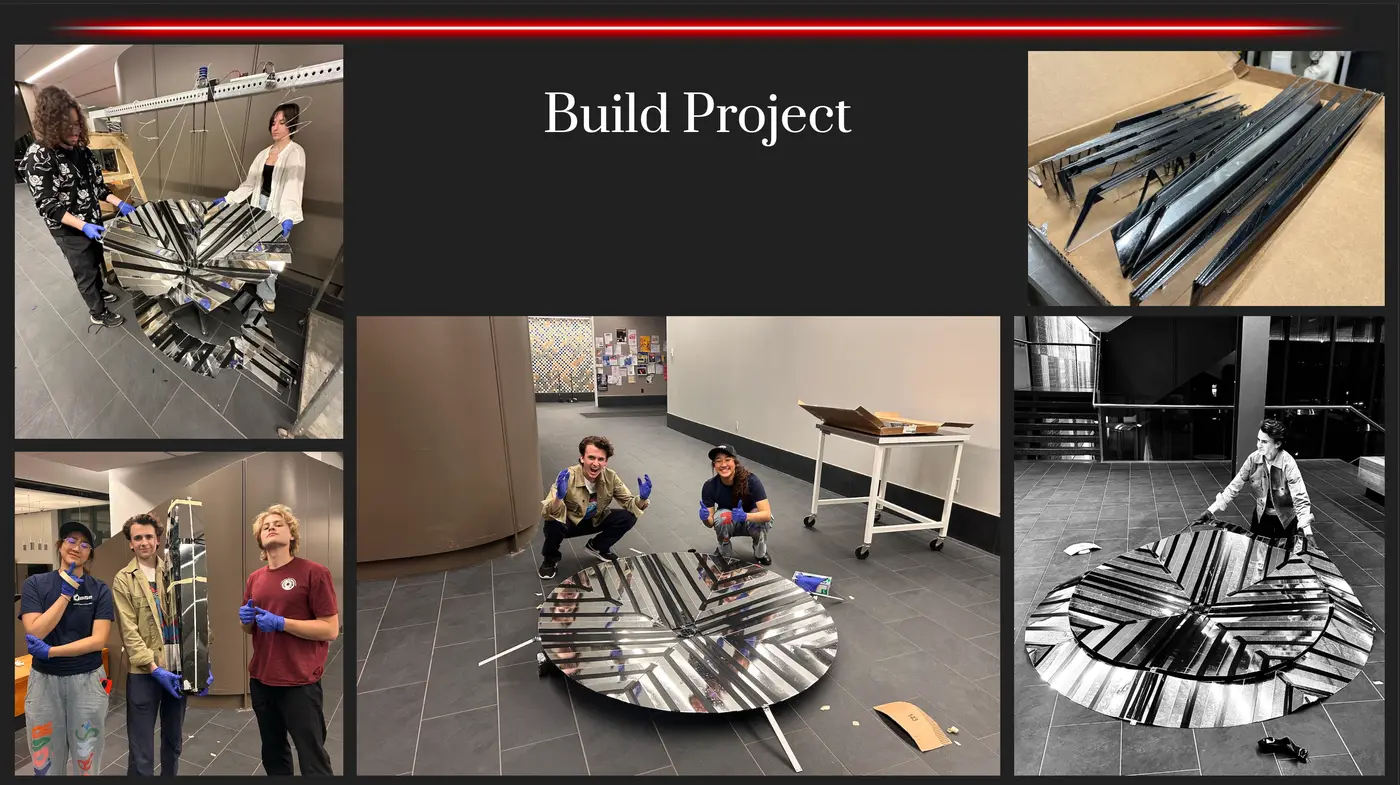
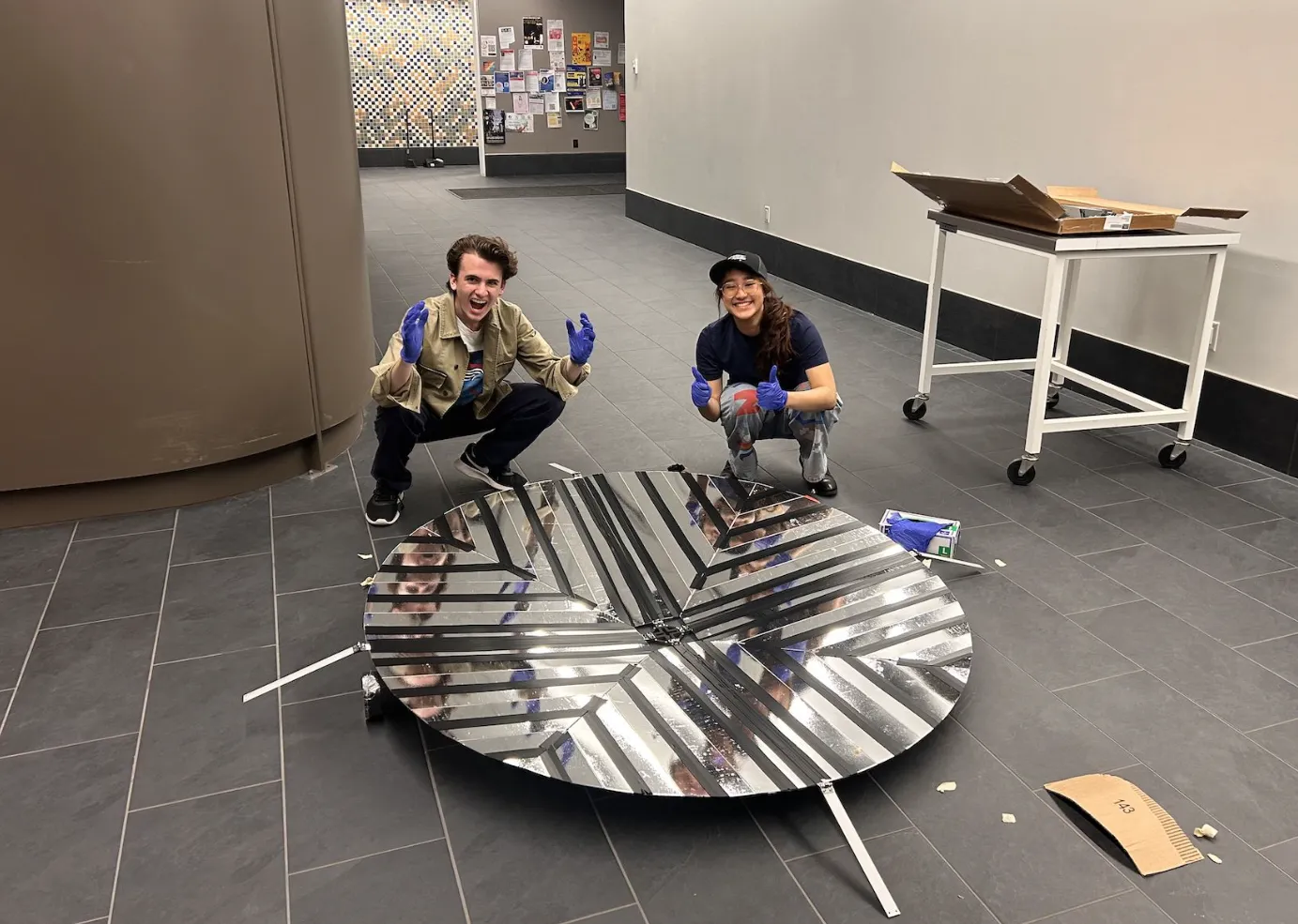
- Build project photos of a half-scale mirrored folding reflector sail for a laser-propelled interstellar probe. Courtesy of Team Laser Propelled Probe, Spring 2024
- Video of heated extrusion of blended simulated Martian regolith and binder. Courtesy of Team Mars Housing, Fall 2022
The lesson from teaching that I use directly with startup clients is to challenge everything. No question is too entrenched to re-examine if the end result is better.
Anonymous reviews from past students include:
- “Marco is incredibly accurate at poking groups to explore the hard questions and keeping things on track. His teaching style is tough but needed in a class with such an intense project spec, and he played a large role in keeping our group on track.”
- “Very direct as a communicator, available to give advice, and experienced as a designer and prototyper.”
- “Marco always made himself available to help students. He has a passion and enthusiasm for the course material, which in turn made me passionate and enthusiastic.”
- “Marco really goes to the effort to understand student questions, he’s upfront when he doesn’t know the answer, and he will work with you to figure out the answer together or direct you to someone who can. It was also clear that Marco put a lot of thought and care into his guest lectures—that work is appreciated! And finally: I really hope Marco continues to mentor young engineers, because he’s very good at it.”