A Less Clickbaity Look at the Future Effects of Autonomous Vehicles: Retail, Ownership, and Home
If current technologists/media/companies are to be believed, the future of autonomous driving is characterized by previously consumed moments of absolute free time in the midst of traffic while sitting in a vehicle that- by and large- looks the same as your car does now. Entire marketing campaigns and the future of many large multinational corporations are dedicated to the notion that this extreme availability will suddenly engender an incredible influx of creativity and productivity into modern society. People who can’t draw will soon be painting Michelangelo while on the move. Citizens who never considered the nature of the American political system will soon be exercising their first amendment right to free expression when they construct seminal treatises on the effects of gerrymandering on urban sprawl while sitting in the seat formerly occupied by the driver. The driver; what an arcane concept! While flying down the Interstate, entire families- once limited in their ability to communicate with one another- will suddenly be able to share their feelings with the speed of the interface detailed in The Matrix trilogies except without the spinal implantation!It’ll be better, faster, stronger, and healthier. Technology is incredible! Progress! WOWZA!
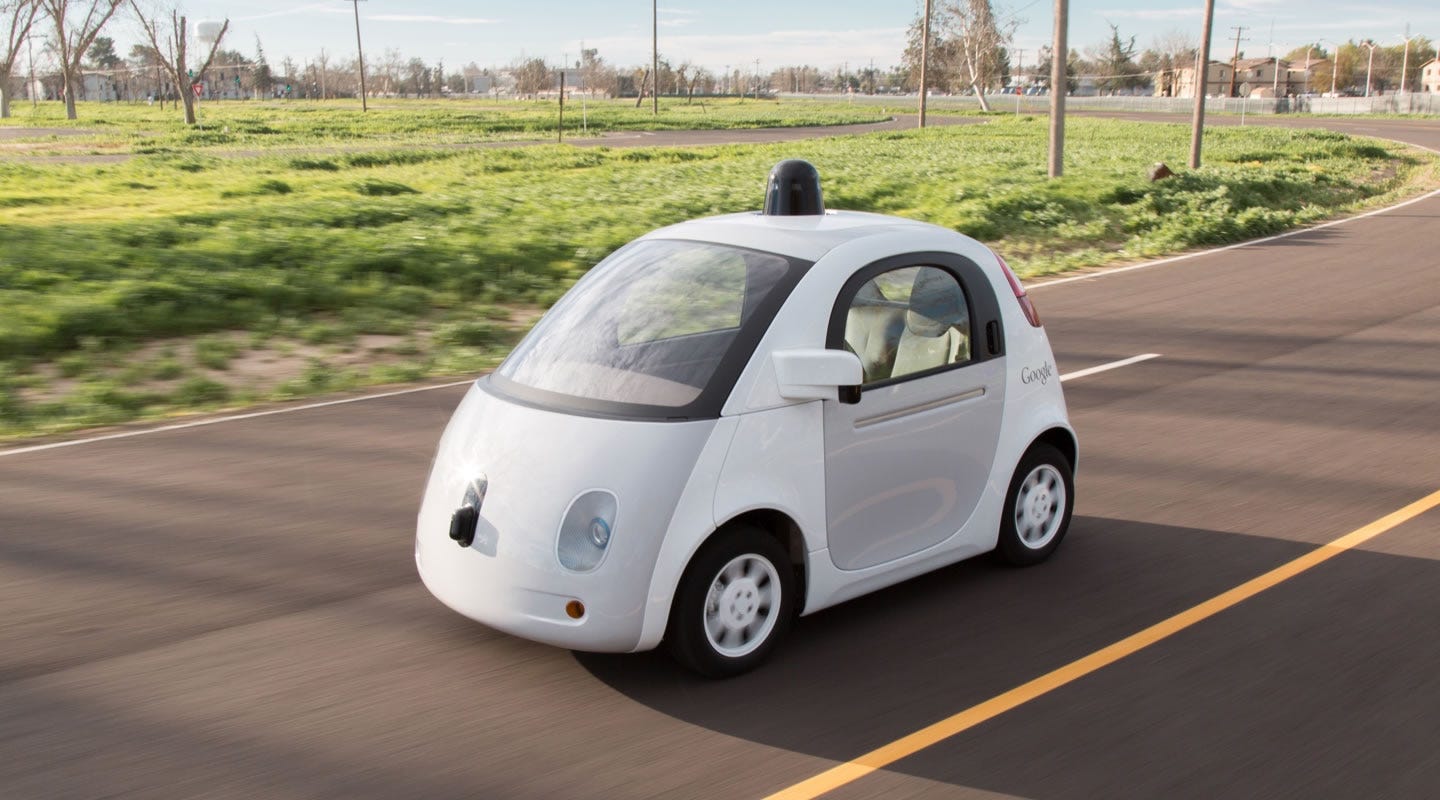
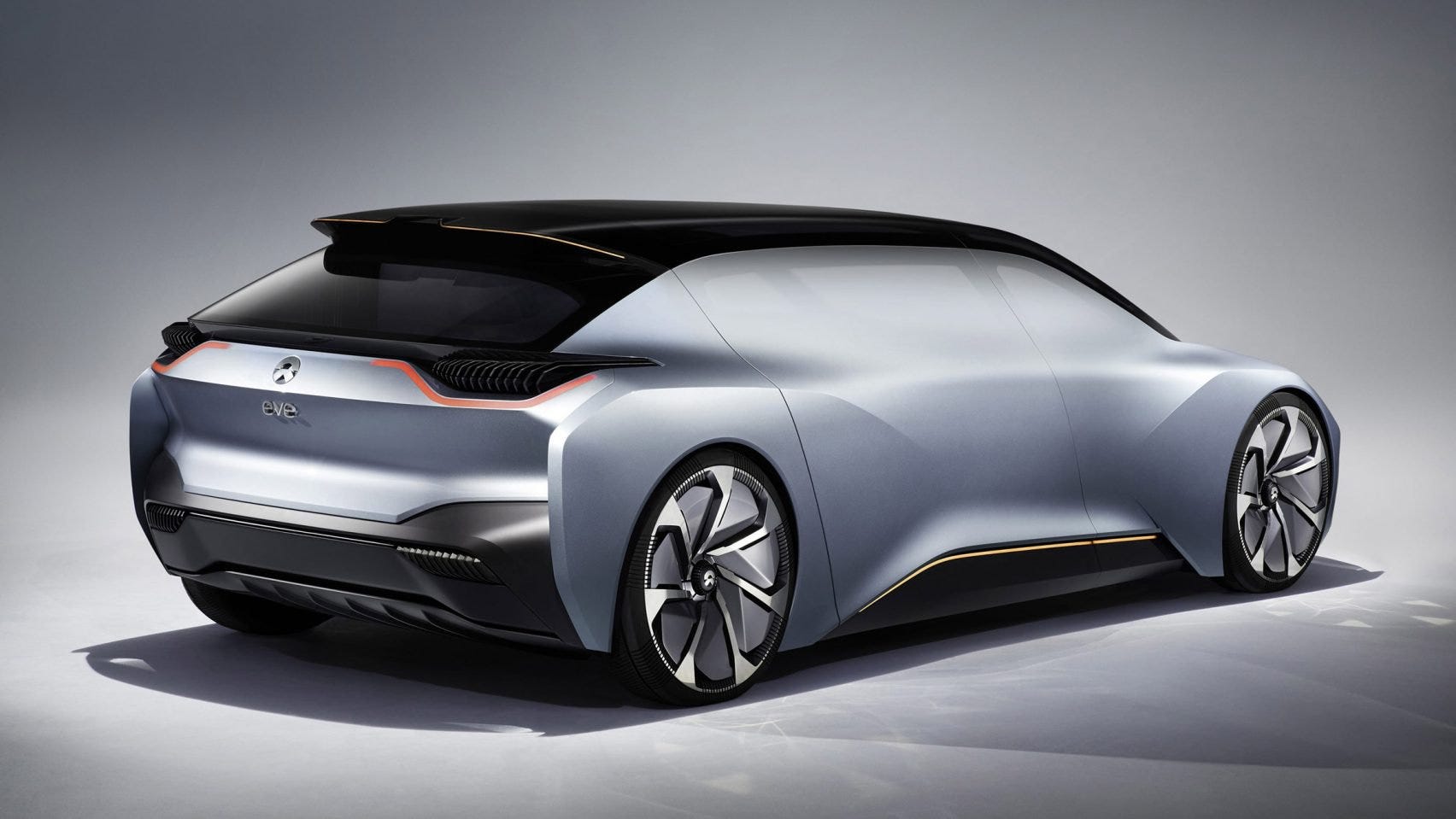
Largely, this is bloviation. Until cars evolve beyond their current physical form, people will continue to do what they already do in their cars but with slightly more freedom. Instead of texting and driving, vehicle occupants will now just text. They will also eat, do their make up, read, fart, and car-dance just like they always have. For now the most interesting effects of autonomous vehicles will occur when passengers are not in the car at all.
The Collective Will Rise (As Long as Cars Still Look Like Cars): Ownership
In America specifically it’s probable that car ownership will, after almost a hundred years of mythologization of the near-right to personally owned transportation, shift towards a model that is closer to those currently used by Lyft and Uber. In The Master Plan, Part Deux, Elon Musk and Tesla detailed a convincing means of loaning out your autonomous vehicle when its otherwise unused and then charging riders for their usage. Your Tesla can make you money while you sleep! It’s an incredible marketing line; unlike a lot of other marketing lines, it also has the potential to actually work as described.
Somehow collective ownership sounds a lot less like Socialism when described in the context of self-driving cars. Despite that, it’s unlikely that this practice will take off in the short term outside of major cities where owning a vehicle represents a significant expense (parking) when the vehicle is not in use. City residents also encounter the concept of collective infrastructure on a regular basis in the form of public transit, parks, and monolithic city-provided services like municipal WiFi. Cities have the required population size to keep collective vehicles which are dependent on demand occupied constantly. That population is also densely arranged meaning that the travel time from job to job or passenger to passenger (time when the vehicle is otherwise empty and therefore a liability) is significantly reduced. Logically, a collective model would not work nearly as well in rural locales where the nearest next passenger or job is conceivably many miles away. As autonomous systems mature, the expectation of speed and efficiency will only grow further hampering the growth of those systems in locations where barriers to that expectation are insurmountable without violating the laws of time and space. Moore’s Law can be applied tangentially to self-driving technology: it describes the rate of increase in computer processor speed but, as a byproduct, also the expectation of proportionally increased utility that comes with that speed. At one time a 56kb dial up Internet connection represented a world of near perfect ability yet now, vastly outstripped by the demands of the content it downloads and the users who consume it, that connection is just shy of useless. Similarly, the collective vehicle ownership experience must be as seamless and quick as possible for mass adoption. Speed of delivery of such a service must remain at least on parity with operating a personal vehicle.
Cadillac is striking an interesting middle ground in this odd ideological struggle that does not solve the parking problem but does address collective ownership to some degree. The company is currently offering an NYC-exclusive monthly subscription service called BOOK that enables subscribers to swap out their Cadillac for any other Cadillac on a whim as often as they want and keep the car for as long as they remain subscribers. The success of this program is a bellwether; if this very lightweight collective system fails due to lack of adoption despite Cadillac’s massive marketing and sales budget aimed squarely at the wealthier strata of the innovation-obsessed 25–45 demographic, collective ownership of autonomous vehicles will likely also fail in larger society.
The Car is Most Useful When Not Carrying Passengers: Retail
It’s likely that package delivery, and especially last mile delivery, will be completed by autonomous vehicles and complementary warehouse load-out systems that enable the supply chain to remain untouched by human hands until the package arrives at its final destination. In practice, this would enable large companies to cut costs dramatically by both reducing the number of required employees in any given logistics operation while also enabling the construction of tightly packed warehouses. Such warehouses would further maximize space by eliminating the infrastructure (halls, rooms, lighting arrays, desks, plumbing, etc.) that is normally required by human employees. Especially for some of the smaller and local companies, this change will prove expensive from either a personnel (hiring pick-n-pull/load-out staff) or capital expenditure (an automated system that replicates the work of the pick-n-pull/load employees) perspective. Accordingly, a new supporting industry will open (or the existing logistics companies will expand) that handles hyper-local automated vehicle delivery services either by offering the systems that handle company-side concerns or by controlling the entire chain from pick-n-pull to autonomous final delivery.
Local stores will also likely open drive-up delivery “windows” where merchandise purchased online from immediately available inventory is loaded directly onto an automated delivery vehicle independent of the presence of the purchaser. This system would be incredibly efficient and would enable final delivery of goods purchased mere minutes beforehand. The stores that roll this feature out first will likely be those that have a customer base with relatively static or forecastable needs; assuming this is true, big box hardware and commercial grocery stores will adopt early. Go into a Home Depot any morning of the work week around opening and you’ll encounter a bevy of contractors from small-to-medium sized construction companies spending the first hour or so of otherwise billable working time picking up material for the day’s labor. With an autonomous service window, big box hardware and the like would eliminate that unbillable contractor time and could charge a premium fee for the pick-n-pull/load service.
These moderately low-investment shifts will occur rapidly once early adopters prove out the model. Isolated incidences of autonomous delivery drive-up windows will be rolled out within five years within the USA assuming that Congressional action does not artificially limit the pace of progress.
In the Future, Live Anywhere (Once Cars Evolve Beyond Cars): Home
Once autonomous cars cause surrounding infrastructure and systems to bend to fit their technology, companies will be more free to explore the autonomous space beyond the obvious. This will happen organically after mass market penetration and saturation have occurred. Given the high cost of production of vehicles in general, shifts in form within the autonomous space will likely begin with companies or product lines focused on extremes (luxury, racing, expeditionary, etc.) within the automotive market. This idea is not new; the trajectory is a common one and is visible throughout modern consumer history. It’s evident even in cars themselves. Radial tires, active aerodynamics, and anti-lock brake systems were all introduced in luxury or racing vehicles before diffusing down into more affordable vehicles once they matured enough for widespread adoption. As passengers in cars begin to grow more and more comfortable with the idea of autonomy and begin to realize that they are far freer to bring their non-car lives into the car, companies will begin accommodating this behavior by building the car more and more like a place where people want to spend more and more of their time. This will potentially result in a product that looks and feels a lot like a home.
In its most complete iteration, the autonomous car will be a full house on wheels replete with all the conveniences and requirements of a normal structural home. In turn, fewer and fewer people will opt for owning traditional structures and will instead live entirely within their autonomous homes. The sizeable chunk of time that most Americans waste on a daily basis commuting to and from their static home will be eliminated almost entirely. Imagine finishing the work week and taking a trip to a national park in another state. Today this trip would consume the entire early evening and late into the night on Friday and then a majority of the following Sunday due to travel alone. An autonomous home would enable driving to occur during typical sleeping (and non-peak travel) hours resulting in almost no time loss. Similar benefits would be felt in business travel, visiting relatives for the holidays, etc. Once in their final location, the occupants would have all the comforts of home because they would actually be home. If this seems like some sort of dystopian far-fetched future to you, it shouldn’t- it is already happening.
The autonomous home will not be in constant motion and, due to the fact that a vast number of services and businesses will likely remain stationary, the home will need a place to stop on a regular basis in longer-term temporary parking. These parking locations could be as densely stacked as a modern residential skyscraper but without all the build costs associated with actually finishing out an apartment unit with cabinets, lights, and windows, etc. It is easier to think of the longer term temporary parking structure as the equivalent of a modern day marina where boaters float into a rented slip and hook into marina-provided electrical and waste removal services for as long or as short as they want before moving on to the next marina.

The tiny house movement also points toward what an autonomous home will look like on the inside where space will be constrained by the legal maximum dimensions of a road going vehicle. Systems akin to the Yves Behar-designed Oriwill likely enable one space within the home to become many spaces on an as-needed basis. In the event that even more space is required, platooned autohomeswould scale to as many or as few as required for the given occupants’ needs.
Onward
The goal of this article is not to present a definitive answer to what will be in the distant future. On the contrary, the field of autonomous driving is so new that the societal impacts are not fully comprehensible at this time. This far-distant future can be semi-extrapolated based on current technological trends and by using historical precedent as a guide for how technology tends to unfold. Of course, this is what every futurecaster does. The nearer-term predictions are far more certain and seem like the next logical step in the progression of last-mile delivery and retail consumption.