The Unbelievable Cost Efficiencies of Manufacturing in Asia as Told by One Object: Scooter Build, Pt. 6.5 Special Feature
Before returning that brushed motor that I later regretted purchasing, I plunked down a whole $12.99USD on a DC motor controller. Just shy of thirteen bucks for any sort of complex electrical component is a hell of a deal.
So just how good of a deal is this controller?
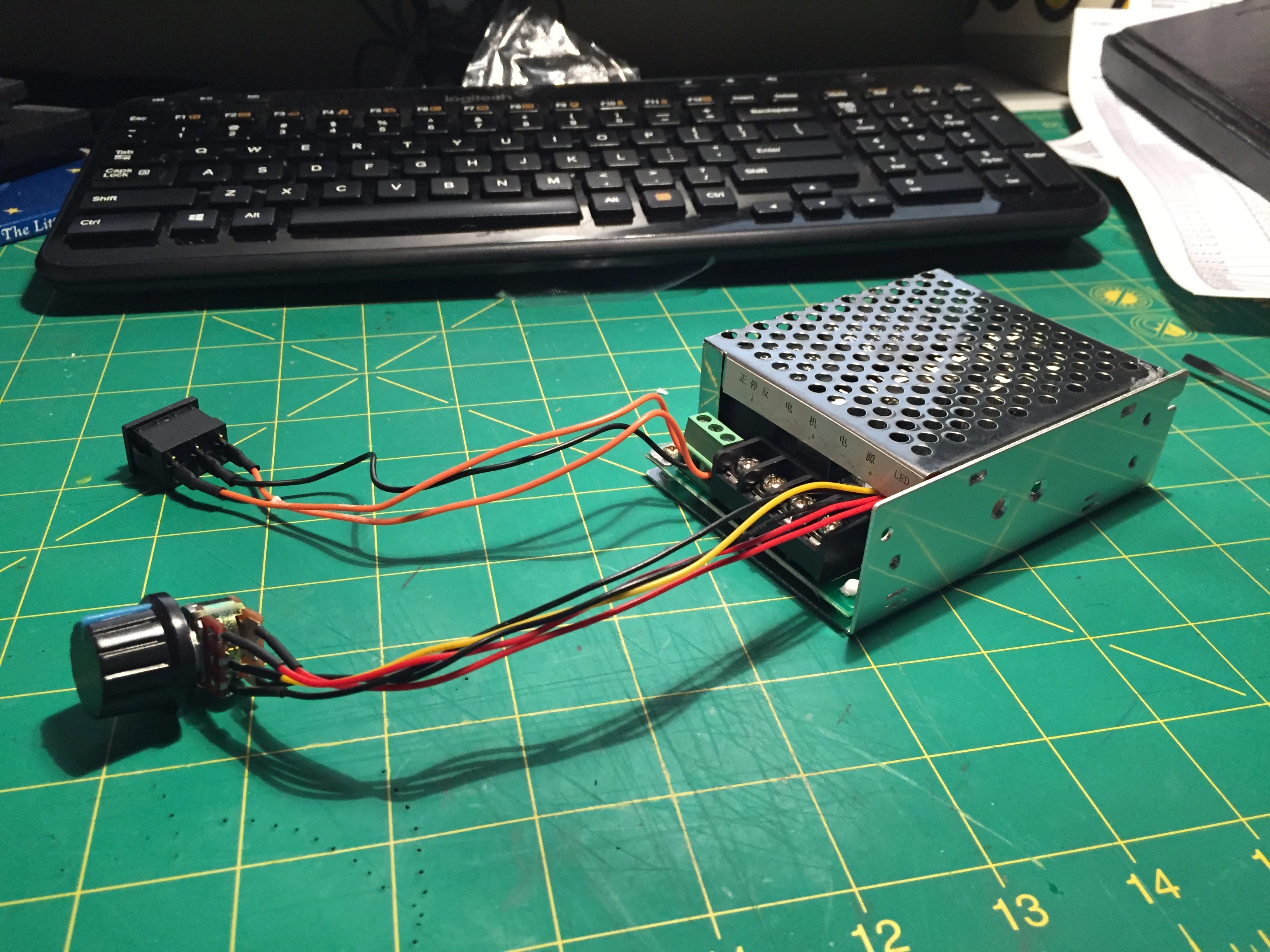
As it turns out, it’s truly insane. Here’s why:
The Cost of Electronic Components
Have you ever heard of DigiKey.com? Basically, if there’s a component that has anything to do with electronics anywhere in the world, DigiKey has that exact part for sale and/or has at least ten more of similar specification. If you were to build a computer resistor-by-resistor from the ground up, this is where you would go. Their pricing- even at volume- is well documented.
The analysis is pretty straight forward:
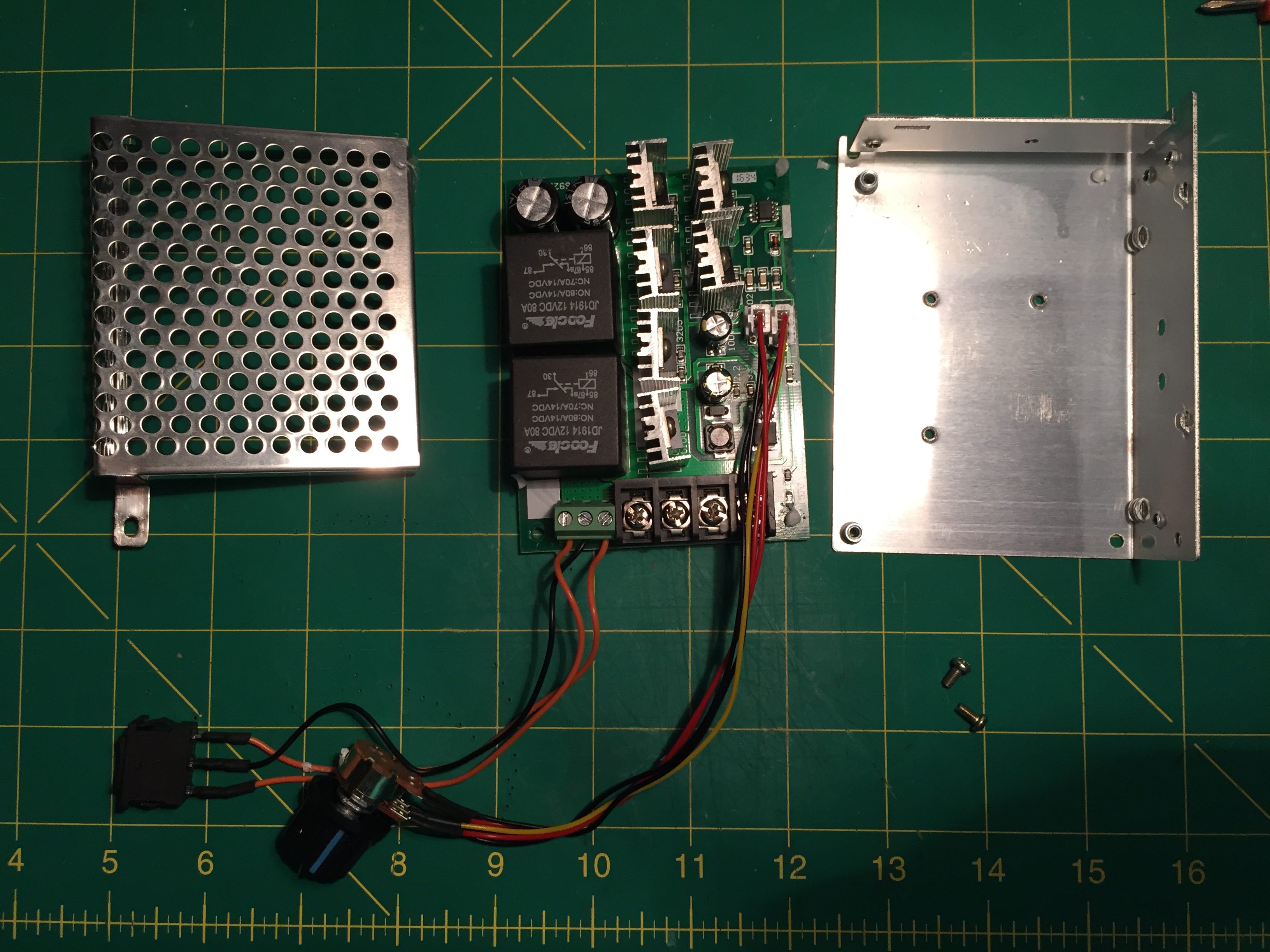
I disassembled the controller so that I could see all the guts and cataloged each component, its specification, and its quantity. I then found the matching (or similarly spec’d) component in DigiKey’s vast library and recorded both the single and volume pricing of the component. In most cases, this meant 5,000 pieces at max; generally I found that it is at this point that the asymptotic nature of volume discounting becomes most noticeable.
Before reading on, keep in mind that I paid $12.99USD for this controller with free shipping from China.
Here’s the data:
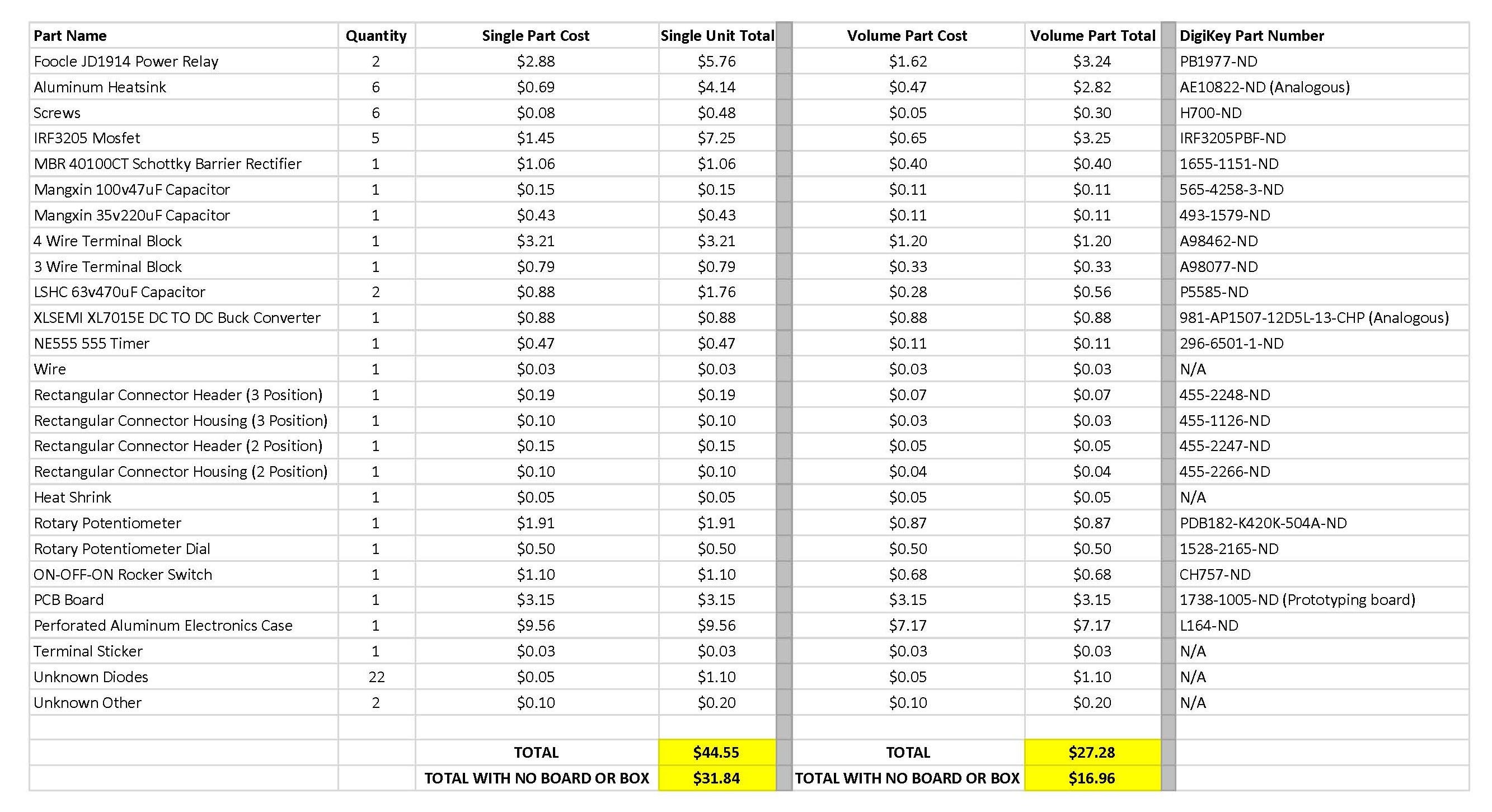
I expected a difference in cost but not nearly as much as presented here. For the third time, keep in mind thatI paid $12.99USD with free shipping from China for this controller.
Assuming that the factory wishes to make a 15% margin on the controller at $12.99, that means that they have to make the unit (after factoring in overhead and other business expenses) for $11.04USD.
Breaking this down further, we can factor in the cost of shipping to get an even closer estimate on what kind of figures the factory is working with. The controller was sent to me via ePacket which is a shipping program that USPS set up with the Hong Kong Post for specifically targeting China’s burgeoning ecommerce businesses that are moving small goods under 4.4 pounds. It’s pretty cheap. While I cannot obtain an exact quote without going through USPS, the Internet says that it costs about $5 to get an ePacket from China to anywhere in the USA. Assuming that to be true, the real cost (to the factory) of producing that motor controller is actually $6.04USD. Again, this figure includes overhead and other business expenses in addition to the actual cost of the components that make up the controller.
Even when using the volume price that does not include the housing and PCB, the six bucks that the factory is left with for everything but shippingrepresents 35% of the total estimated cost of the components alone.
If you’ve made it this far, you should be dumbfounded.
A Hot Take on What This Means
There are plenty of stories on labor conditions in China. I’ve read a lot of them and I’m sure that you have as well. A lot of those stories didn’t hit home until I actually went to see factories in person. I saw plenty of production lines operated by kind and decent humans who are deeply committed to running a business and employing as many people as possible. Those owners and those companies truly care about their employees and, all things considered, offer a honest way to earn a living in conditions that are both legal and as comfortable as a factory floor can be.
I also saw factories where this wasn’t the case and that is heart wrenching.
I am not going to speculate on the nature of labor conditions at the factory that made this controller. They could be bad or they could be great. My line of thinking is not meant to be a condemnation of one organization but rather a vehicle for analyzing a prevalent trend across overseas manufacturing on the whole.
As he watched me learning to precisely cut pieces of balsa wood on his bandsaw for his whirligigs, my grandfather- a WW2 veteran who later loved playing horseshoes in his backyard- would say:
“Close enough is only good enough in horse shoes and hand grenades.”
I think about that a lot when designing things for mass manufacturing. If a factory located anywhere in the world can build Widget X at cost but can only do it at the expense of human decency, does that make it okay? Is it close enough? Something has to give when price targets are artificially low: quality, people, or margin.
Factory owners are rightfully under tremendous pressure from purchasers to maintain and constantly exceed quality standards. Factory owners are also rightfully under tremendous pressure from shareholders to maintain and constantly exceed margin targets. Who represents the people on the line?
In China specifically, the government is honestly trying to do better. There is a minimum wage that is designed to be livable, overtime hours are legally limited, safety standards are rigorous, and there’s an extensive (although opaque) public assistance infrastructure in place to help those who need it. In a perfect world, we wouldn’t read about labor abuses because the factories that violated those laws would be shut down and penalized. The reality is that there are only so many regulators who can police production on a day to day basis and weed out those violations. Americans often complain about how the US government cannot maintain pace with business which is at least partially fair. In China, the government is truly swamped on this front.
This means that we as consumers- especially when we exert our buying power directly upon the producers of goods without a retail middleman in the way- need to think extremely carefully about how we want to spend our cash. Wisely spent consumer dollars, that which factories throughout the world yearn for, are powerful means by which people who are trying to lift themselves up can be protected in the push and pull of global commerce.
Think about that next time you swipe right to buy that cheap (insert thing) on Amazon.