Hooked on a Feeling
In the start-uppy lingospeak that permeates modern business culture and design, the term MVP (minimum viable product) is often thrown around with reckless abandon:
Start Up Bro 1: Bro, did you see that we achieved sustained 31% quarter on quarter growth over the last three quarters? Profitability, schmoffitability. We’re growth hacking!
Start Up Bro 2: Hell yeah, bro! Who would have ever thought that people would be so interested in our health insurance plan as initially demonstrated by our direct-to-consumer subscription for our farm-to-table rutabega-based laxative. Gwyneth called and she said that colonic microcleansing is going to be big in 2022; she wants to invest now.
S.U.B. 1: I’ve never seen a better demonstration of the viability of the underlying business model than within this obviously brilliant MVP. We’ve got all their credit card information now! Doodoo makes everyone rich!
S.U.B. 2: Doodoo makes everyone rich! (to the rest of the WeWork hot swap desk space) Doo 👏doo 👏 makes 👏 ev 👏ery 👏one 👏 rich! 👏
(You know- just like that. I’ve definitely seen worse ideas. Also, if anyone decides to actually make this a reality, you owe me and I will not accept discounted product in lieu of standard monetary remuneration. )
In any case, the theory of the MVP is sound. But what if that minimum viable product is treated as the end goal and not as a stepping stone to a vast complexity down the line?
Enter the Nudge
As we struggle to understand the role of technology in our lives and especially as critical societal links are now entirely connected via Zoom in this age of COVID, it seems curious that we have yet to really understand the spectrum of human emotion in reaction to technological input. Although nudge theory begins this exploration (tldr; subtle interventions can cause big changes to human behavior when such interventions are deployed in complex systems)it falls short of understanding what happens when the system in which the nudge nudges is either extremely simple or non-existent. Ultimately, nudge theory’s inventor was subsequently awarded the Nobel Prize in Economics for this work; you’re likely already familiar with Richard Thaler as you saw him doing his best Hollywood impersonation in The Big Short when he explained synthetic collateralized debt obligations along with Selena Gomez using a running blackjack metaphor:
Upon awarding the Nobel to Dr. Thaler, thenomination committee stated that:
“He is a pioneer on integrating economics and psychology,” the Nobel committee said Monday as it announced the prize. “He’s made economics more human.”
But what happens when that matrix of a system disappears? Can the nudge still exist? What is the minimum amount of stimuli that causes a human to react? Better still, what is the minimum stimuli required to cause a human to develop an emotional connection?
Rudy: The Concept
For the record, I’m not suggesting that my work with Rudy the Robot is in the same league as that of Dr. Thaler; nudge theory is used by the Social Security Administration in the USA to get people to save more for retirement while Rudy mostly just beeps loudly. Nudge theory is not even a perfect explanation for why Rudy exists. Rather, it merely is the most intelligible note in the early cacophony that led to Rudy’s beginning.
So what is Rudy?
Rudy is an Arduino Nano-based robot (I use the term “robot” lightly here; Rudy has just one moving part) that responds to proximity via an onboard array of RGB LEDs (a NeoPixel clone), a tone generator, and a motor. Essentially, when Rudy detects proximity via its “eyes” (an ultrasonic sensor) it responds by increasing the color and brightness of the onboard LED array until a set point at which it rotates away to presumably resume a more quiet life free of the enervation of the passing human being.
Rudy is designed to be an MVP for emotional response. Through observation of existing human interaction studies and the work of others that resolved into technology like Sophia, the Furbee, the original Tomagotchi, and especially the defunct/not-defunct Jibo, I attempted to distil down the essence of connection into something intelligible. Ultimately, I resolved my findings into several key points. The three most important of that group are written below:
- The SFFW (Small, Friendly, Furry, and/or Warm) Rule: We need to feel attached to a key formal characteristic of the robot’s physical structure. Things that appear non-threatening or friendly are intuitively more understandable and interesting to us.
- The Faces Rule: We naturally respond to things with faces or features that we perceive as face-like. This is best exemplified by both E.V.E. and WALL-E in the eponymous Pixar film.
- The Curiousity and Novelty Rule: Humans are exploratory by nature; it is what made us the apex predator to (literally) end all apex predators on the planet. If something presents as a non-threat, the immediate response is to understand and explore.
By following these guidelines, I hypothesized that it would be possible to provoke an emotional response (and preferably an emotional connection in the form of empathy) to Rudy. After reaching this determination, I began to iterate on the theme by slowly building more and more interaction into Rudy’s code until I was satisfied that I proved my original hypothesis. The relatively lightweight computing capacities of the Arduino platform proved to be instrumental in providing a natural limit to my own unfortunate and counterproductive desire to continually add more and more to Rudy.
Rudy Now (V3)
Rudy went through many small changes throughout development but ultimately those changes are represented by three major revision states; the most recent state is Version 3.0:
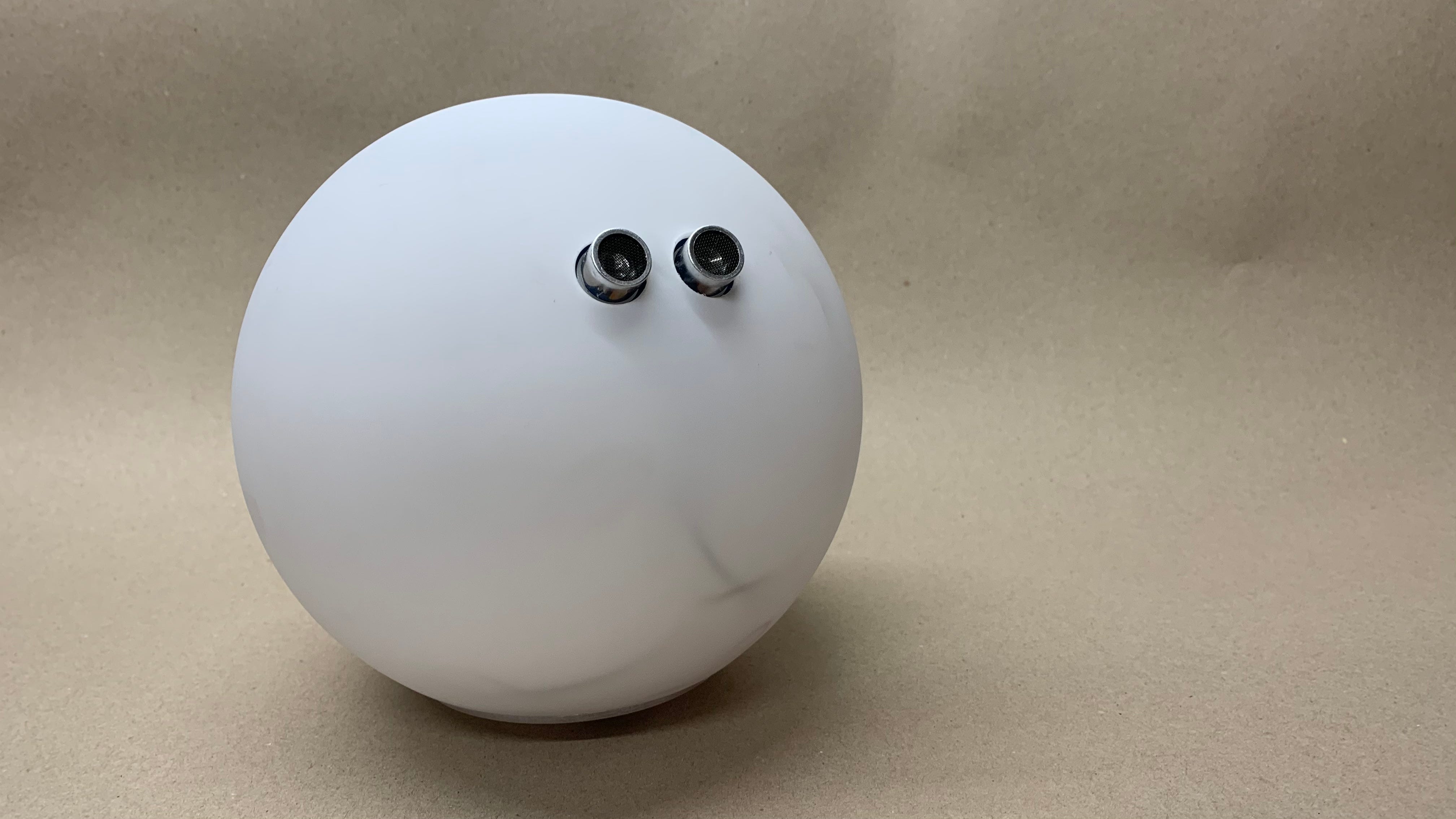
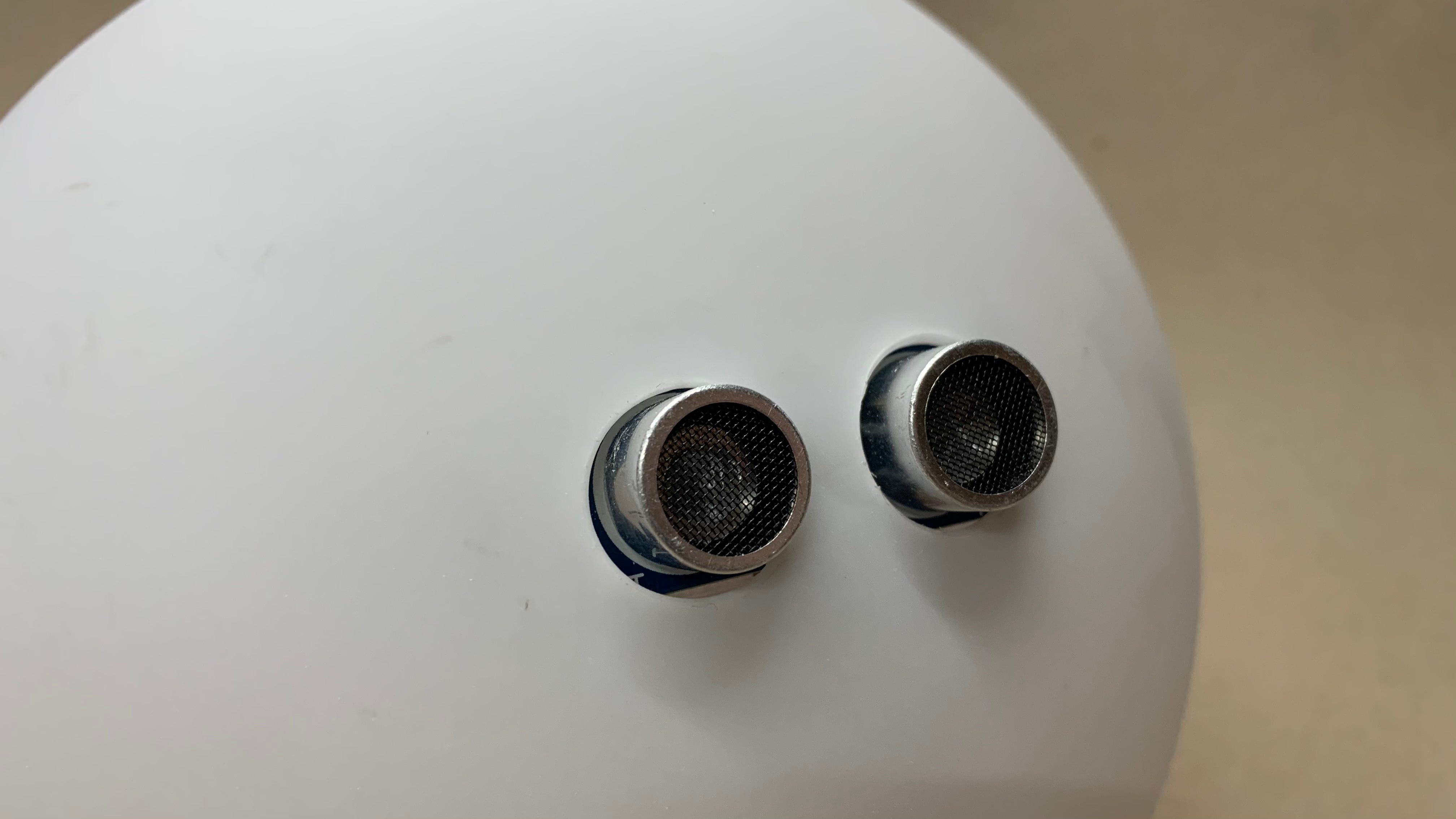
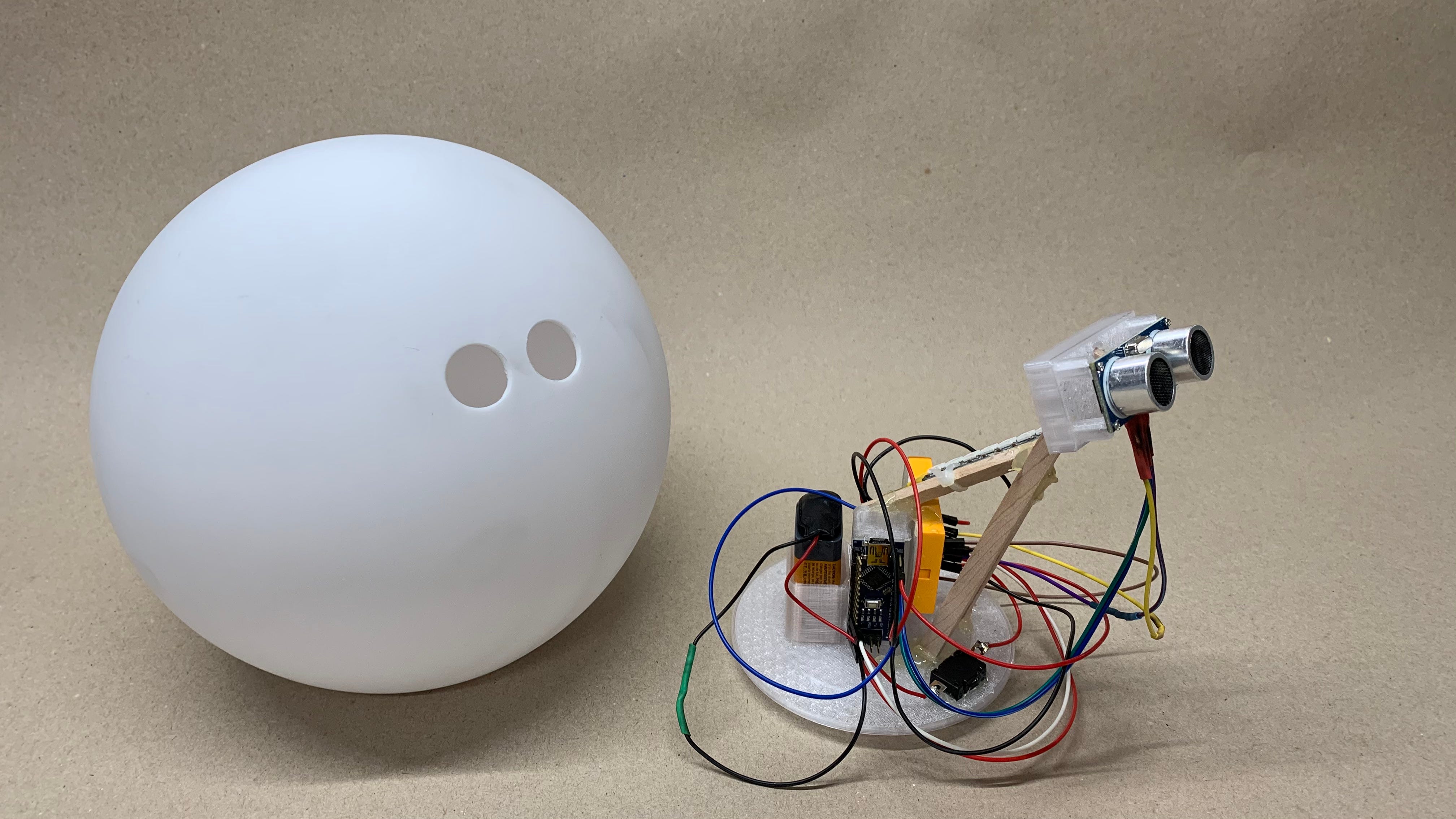
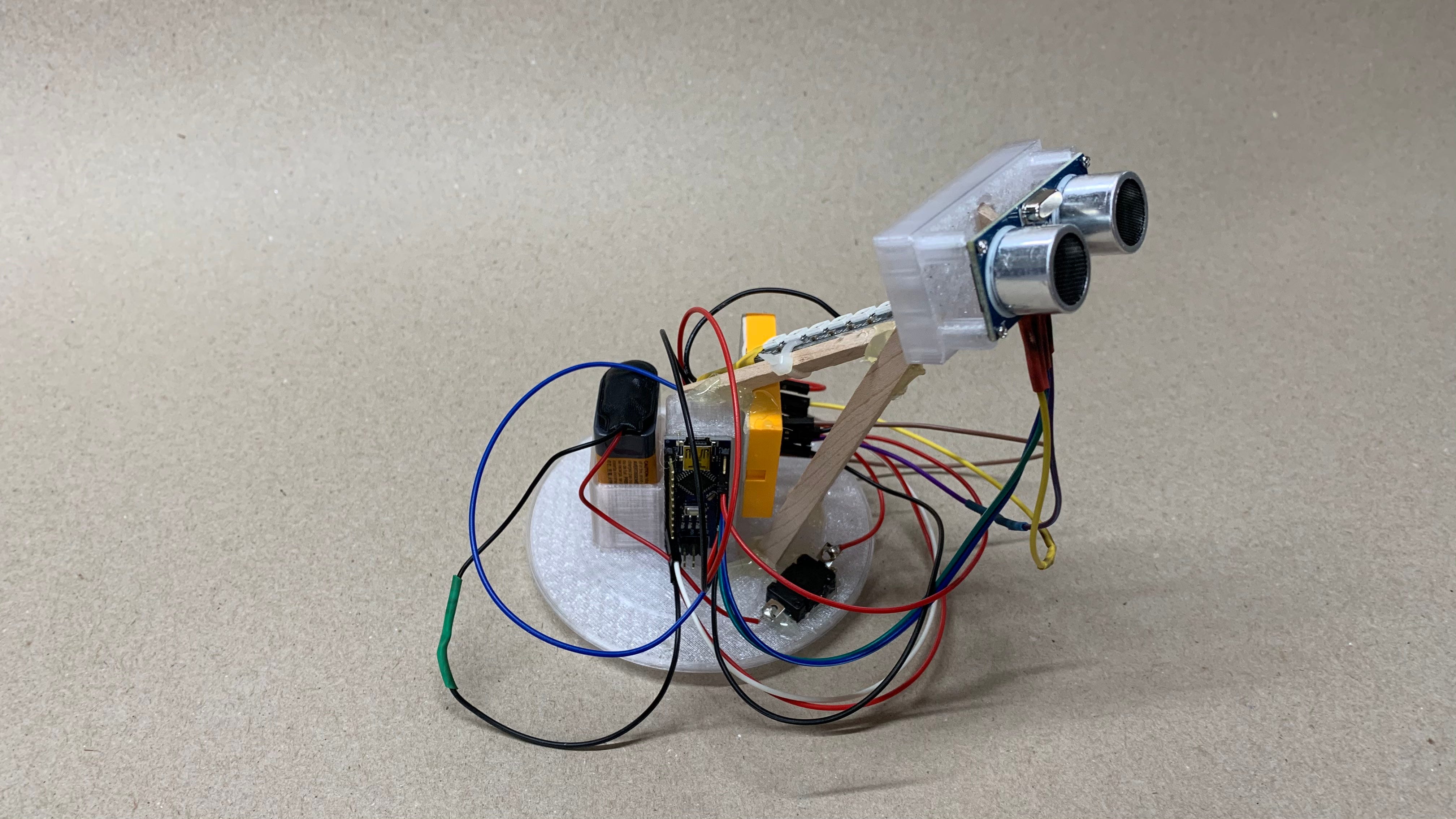
Rudy’s build history and revision states are well documented from both a code and hardware perspective on both my Tumblr and Thingiverse account; click through to my profile on Thingiverse to see Rudy V1 and Rudy V2.
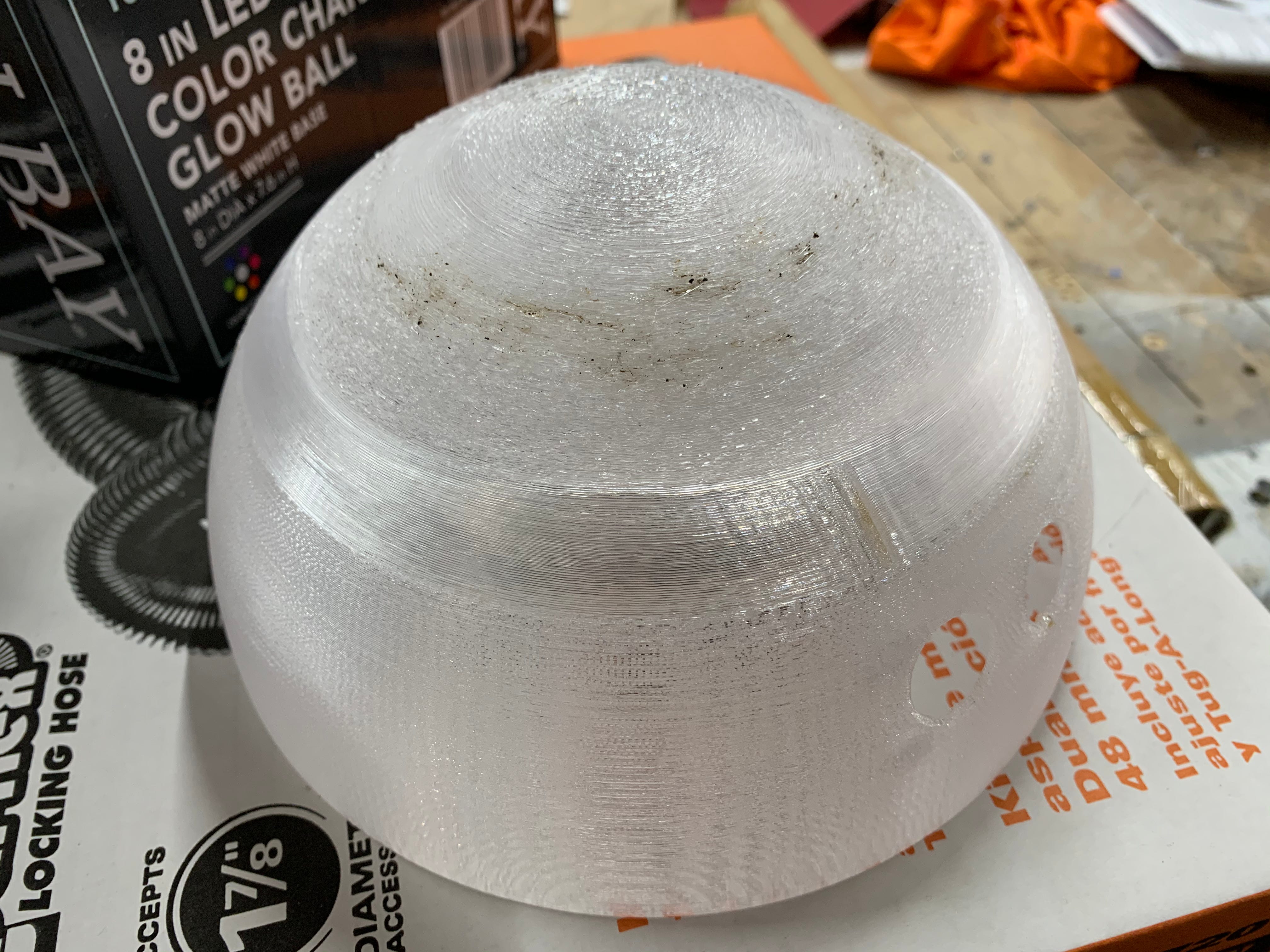
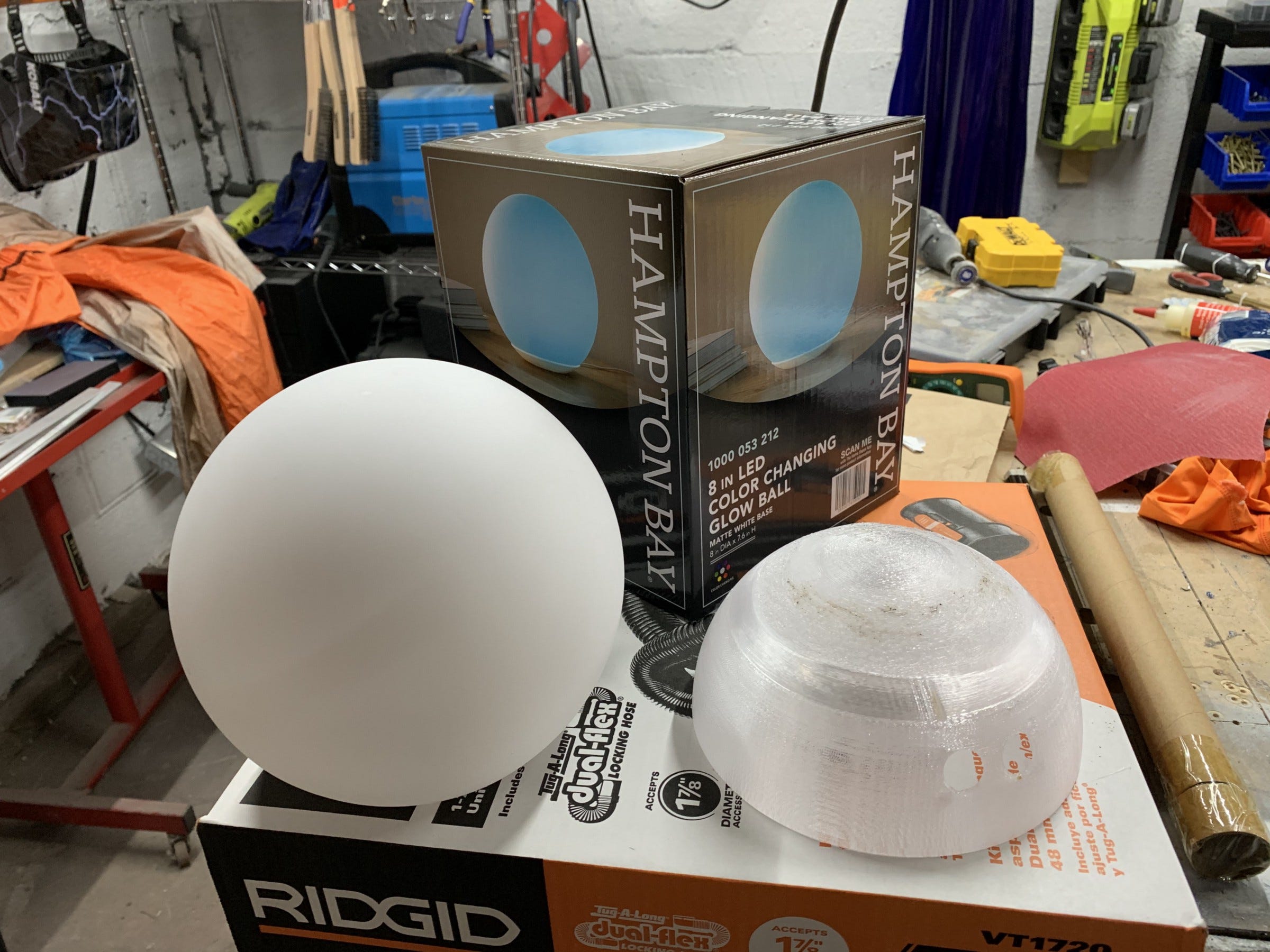
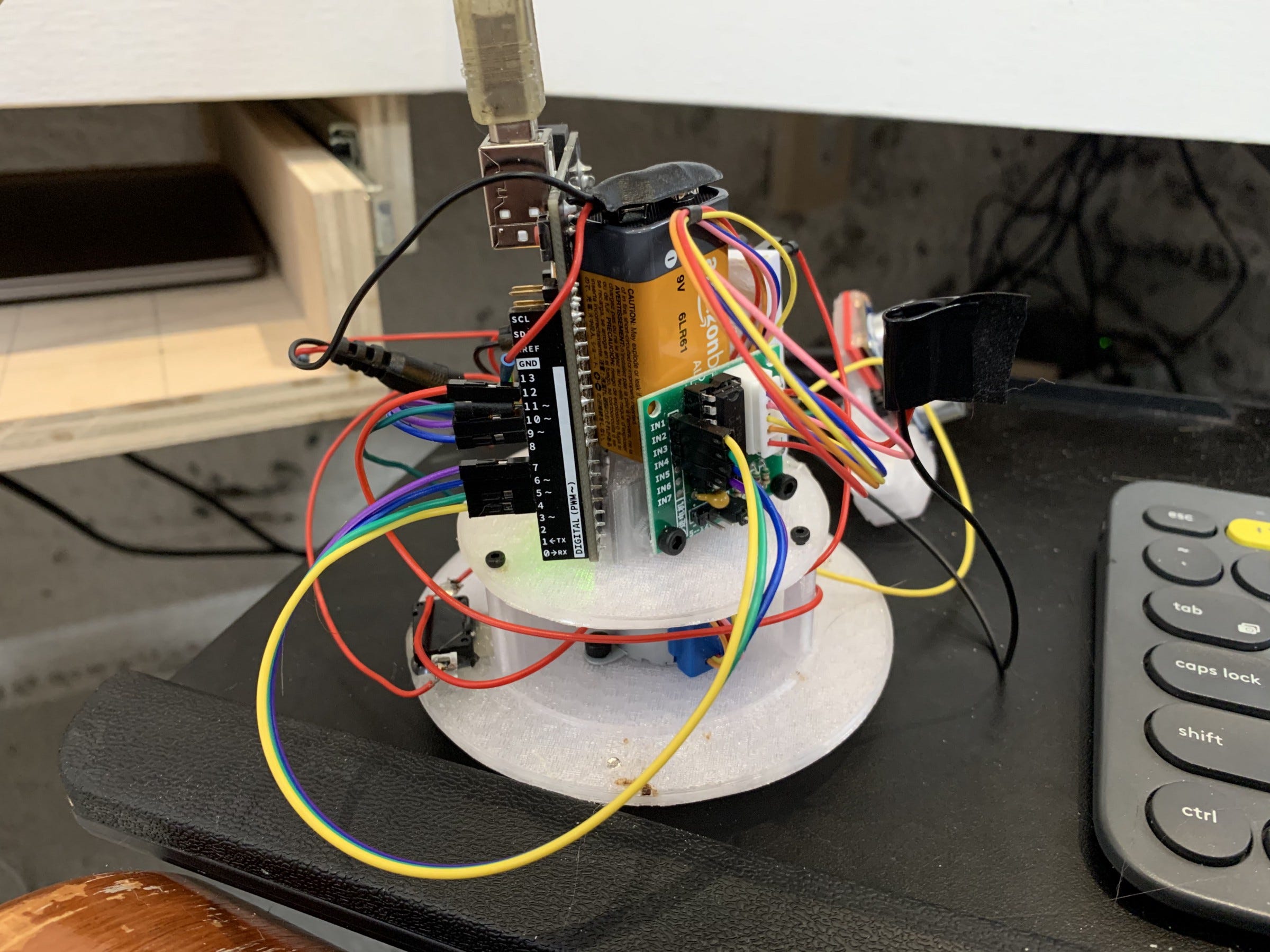
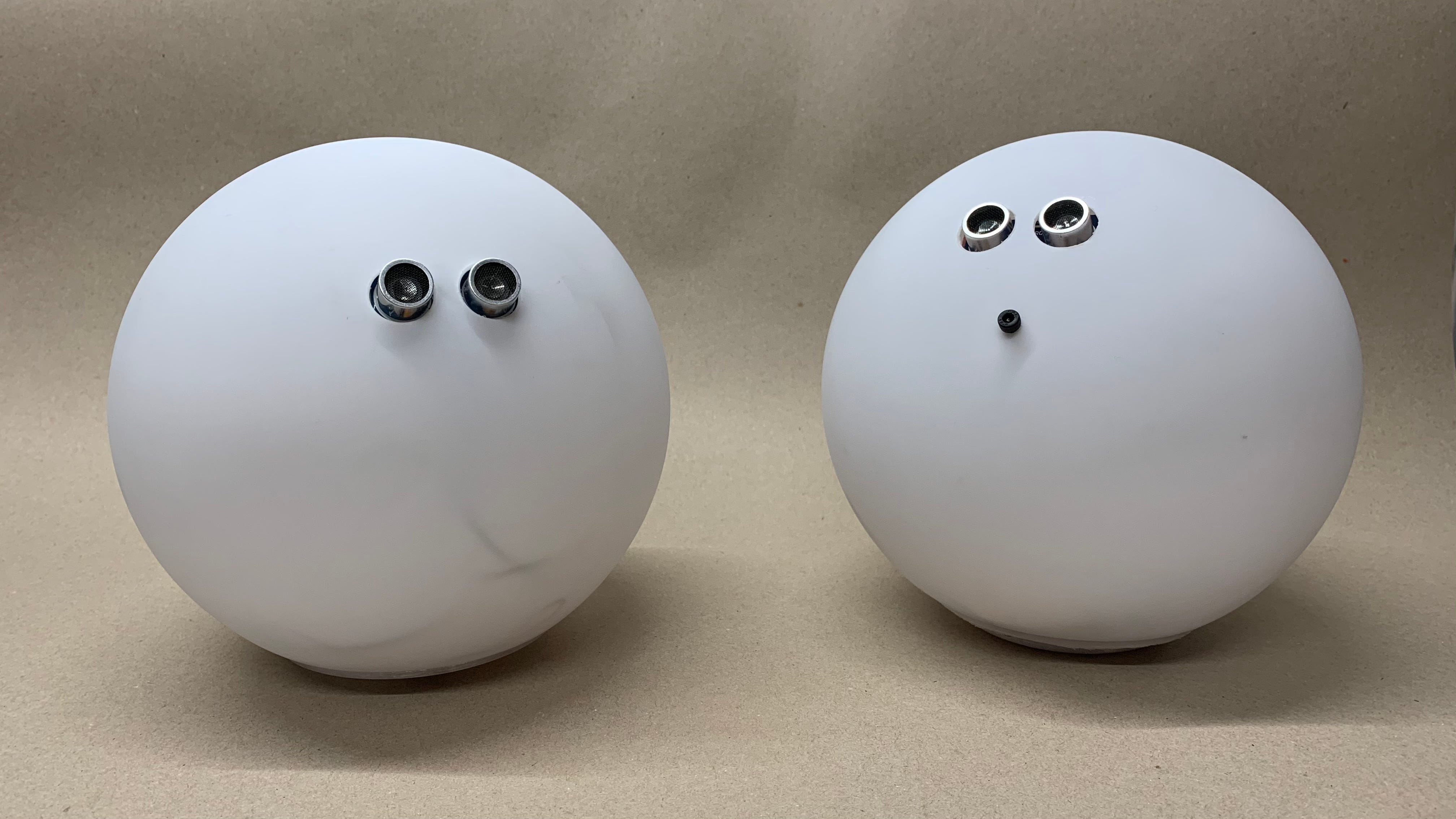
Ultimately, the simplicity of V3 is a consequence of many tests and failures of the original system. Externally, the only difference between V2 and V3 is a single hex head machine screw which holds a secondary ultrasonic sensor assembly in place within the shell.
Lessons Learned and Opportunities for Future Iteration
Simplicity is incredibly difficult. Rather than having the luxury of trying to dumb down a full-fledged idea for the sake of an MVP, I built from the ground up with no assumption of end state. Effectively, every single little detail becomes far more noticeable and simple choices (e.g. the size of the holes through which Rudy’s ultrasonic sensor poke and how far the sensor pokes through those holes) become exceedingly important. Simplicity requires a finite level of control that, in several cases, I anticipated but did not fully intellectualize.
Rudy as a stand-alone unit is now hardware complete aside from moving to methods of internal production suited for higher volumes and the standardization inherent to such quantities. That being said, Rudy is only the beginning for an ongoing series which I am in the process of engineering. Whereas Rudy cheats a bit by incorporating a face, the next robot in this study series will not rely on anthropomorphization of any kind to engender emotional response or empathy within the viewer or interactor. Stay tuned.